Lesson Fourteen Teaching Guide:
Suggested timings for today’s 1 hour class:
Get seated and settled - Class Intro (5 mins)
Read/Listen to Lesson/Story and review Demo board exercises (20 mins)
Students play on individual boards with partners. (25 mins)
Cleanup (5 mins)
Regroup/Debrief for review and awards for daily challenges completed. (5 mins)
Summary: Briefly review of last week’s lesson + chess challenge. Cover today’s story, demo board exercises + review questions, and the daily challenge.
Story + Demo Board Exercises & Puzzles:
Story: After a crushing defeat and some unkind teasing, King Mateo feels more than just the sting of losing—he feels alone. But just as he begins to lose faith, unexpected visitors arrive. But will they be enough to convince King Mateo to try again? Can a secret move bring him back to the board? Let’s find out!
Demo board: Demonstrate castling and explain the rules for castling. Show how casting allows the R's to connect and control the centre of the board via their force fields.
Game Instructions:
Full Boards.
Game Objective/How to Win:
Checkmate the King to win! Most points captured wins if no checkmate occurs.
Practical Lessons Learned:
How to keep the K safe with a new move called Castling. How to connect the R’s.
Emotional Skills Learned:
How to cope with big emotions when provoked (if possible, boundary up and leave). When to confide in safe people (with Wilbur) and when to forgive (after Korben apologised and presented an action plan). How to trust even when it’s hard. And lastly, resilience, how to try again (after getting comfort, help, and direction).
Daily Challenge:
Check the K 2 or more times. Castle within the first 10 moves.
Review Questions for Lesson Fourteen: (Suggestions)
What two pieces are needed to Castle?
How many squares does the K move when castling and in what direction?
Can the K castle is he’s moved earlier in the game?
Can the K castle if he is in check or passes through check while castling?
Why do we want to castle? Who does it protect?
Why is teasing someone unkind, even if you’re excited about winning a game?
What did Korben do to repair his relationship with his brother?
How might castling in chess be like finding safety or support when life feels chaotic?
Introduce Game:
Ok everyone, choose a partner. It’s time to play!
Post Game Debrief:
Review how the game went, if there were any problems/successes. Give prizes for challenges completed.
Piece Abbreviations
Kings = K, Puppy Pawns = P, Bull Rooks = R, Pony Boy Knights = N, Billy Goat Bishops = B, Queen Giraffes = Q
Piece Values: (See lesson 3 & 10)
K = Infinity
P’s = 1 pt each
R’s = 5 pts each
N’s = 3 pts each
B’s = 3 pts each
Q’s = 9 pts each
Demo Board Setup and Explanations:
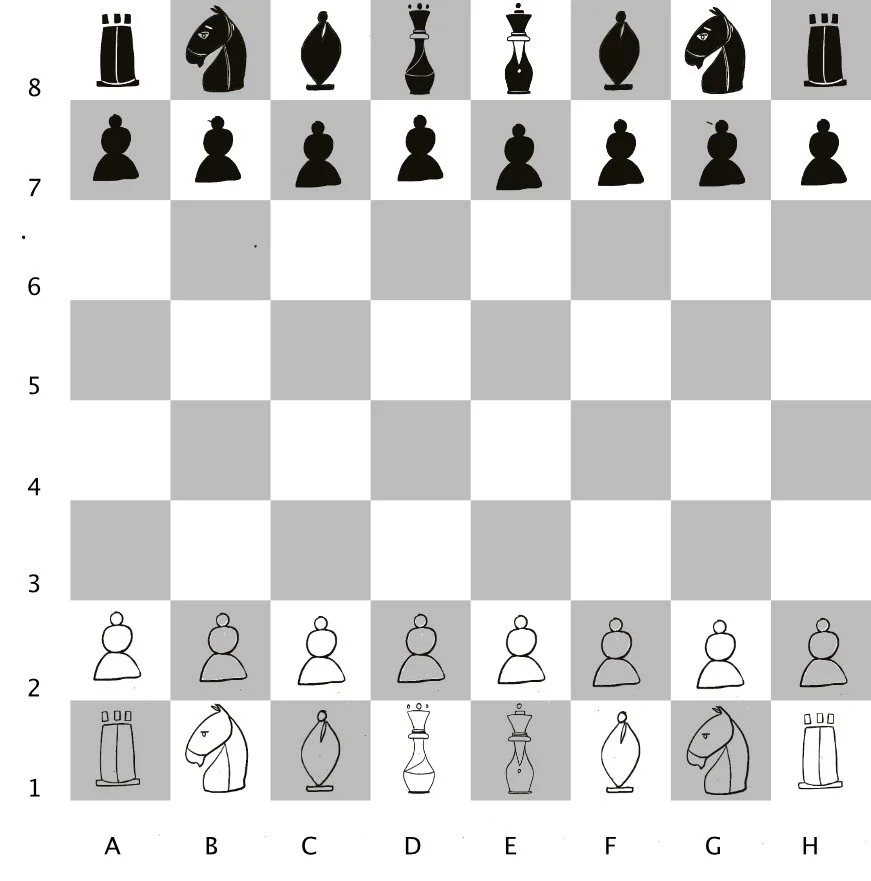
Board 1: Today we’re going to learn how to Castle. But first, we need to learn the rules to Castling! Let’s begin with a fresh board.
The first step to castling happens before we even begin our game. We make a plan. This means we decide if we’d like to castle and which side we'll castle on? The long-side/queenside or the short-side, kingside? Let’s try king-side!
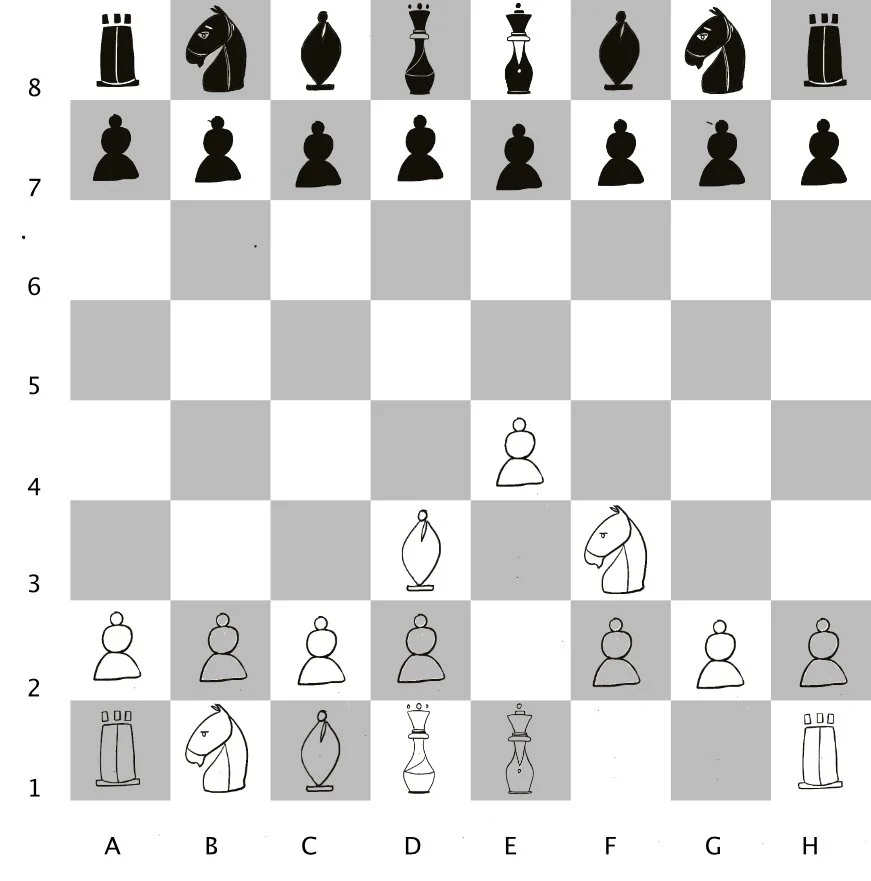
Board 2: Second step is moving our pieces out of the King’s and Rook’s way. Which piece should we move first? Let’s begin with the N on g1. What piece is still between the K and the R? Yes, the B! In order to move her, we’ll need to first move a P. Which P should we move, the P on e2 or the P on g2?
e2 is a good choice! Let’s move it to e4. This keeps the castle wall intact! Ok, now let’s move that B! Which direction should she move, left or right? Which square? How about d3?
Great! We’re on our way to castling! As you can see there are no longer any pieces standing between the K and the R. What’s next you may ask?
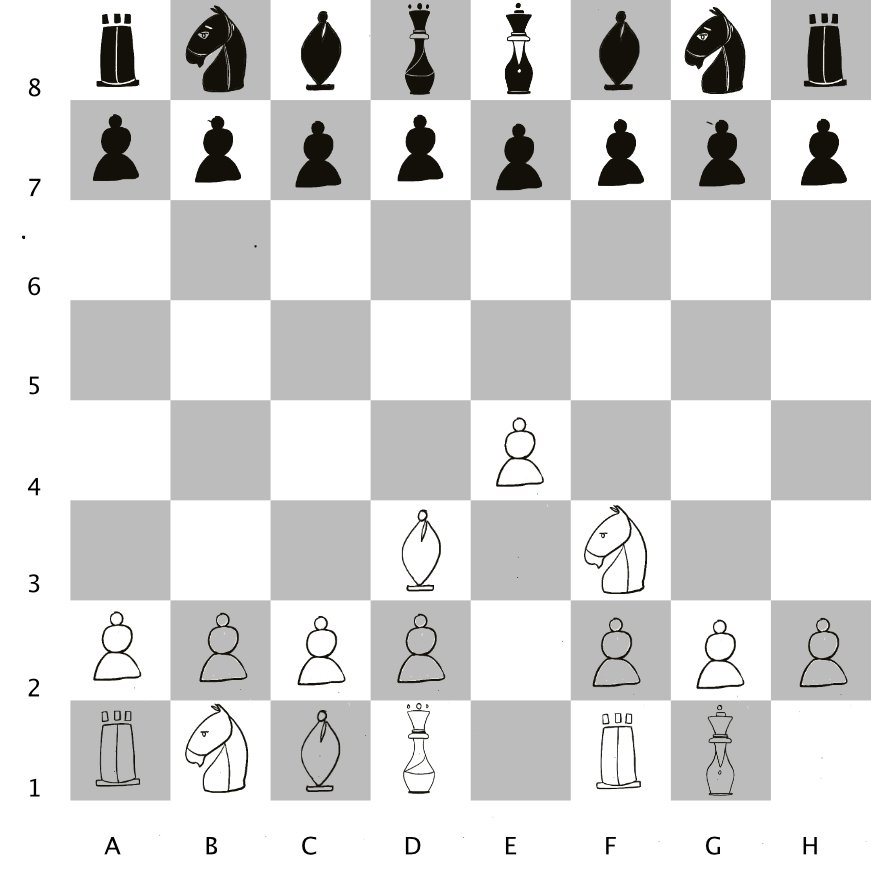
Board 3: Now, we do the fun bit! Our K puts on his invisible kangaroo trousers (which grant him jumping powers), he and leaps two squares to his right! But that’s not all, our R has his own kangaroo trousers and he does an even bigger jump! He leaps right over the K’s head and lands next to him on f1! See how the K is now in protected in his little castle? Congratulations, you’ve just castled! Now the King is much more safe than he was before!
Now, there are a couple more rules we need to know before we’re castling experts, but we’ll learn more about that next week! For now… let’s head to our boards and try castling for ourselves! Off you go!