Lesson Seventeen Teaching Guide:
Suggested timings for today’s 1 hour class:
Get seated and settled - Class Intro (5 mins)
Read/Listen to Lesson/Story and review Demo board exercises (20 mins)
Students play on individual boards with partners. (25 mins)
Cleanup (5 mins)
Regroup/Debrief for review and awards for daily challenges completed. (5 mins)
Summary: Briefly review of last week’s lesson + chess challenge. Cover today’s story, demo board exercises + review questions, and the daily challenge.
Story + Demo Board Exercises/ Puzzles:
Story: A rumble shakes the Serengeti. The elephants are on the move, and so is Gemma’s team. With a prized trophy at stake and every path blocked, can they navigate the chaos without losing themselves—or each other? In a world where haste can lead to stalemate, will courage and wisdom be enough to tip the scales?
Demo board: Review stalemate. Do puzzles: Is this a checkmate or a stalemate? A clue to figuring it out… You can’t have checkmate with first having check! No check + No pieces able to move, block, or capture (It is illegal to move the same piece to the same square 3x’s in a row - this just prolongs the inevitable), there are no safe squares to move to, if the K moves, he puts himself in check.
Game Instructions: Full boards.
Game Objective/How to Win:
Checkmate your opponent's K! Avoid stalemate at all costs!
Practical Skills Learned:
Recognising stalemate vs checkmate. Planning and Strategic Thinking: Rushing without a plan can lead to a stalemate. Thinking ahead and considering consequences prevents being “boxed in” and allows you to make better moves.
Emotional Skills Learned:
Patience, Self-Control, and Perspective: Managing fear, frustration, and impulsiveness helps us respond wisely instead of reacting recklessly. Learning to recognize what stalemate is teaches us humility, reflection, and the value of resetting when we hit a dead end.
Daily Challenge:
Avoid Stalemate! Checkmate the K!
Review Questions for Lesson Seventeen: (Suggestions)
What was happening in the chase when everyone was moving quickly but no one could escape?
Did moving fast help them or hurt them?
What does it mean when we say there are “no safe spaces” left?
Why do you think it castling is an important move in chess?
Can you think of a time when rushing made something harder instead of easier?
Why is having a plan important before we move in chess and in life?
What’s the difference between checkmate and stalemate? (Ask this after we demonstrate it on the demo board.)
Should we feel ashamed if we cause a stalemate? (Of course not, it teaches us what to do or not do next time!
Introduce Game:
Who is ready to ready to play? Let’s go!
Post Game Debrief:
Review how the game went, if there were any problems/successes. Reward students for challenges completed.
Piece Abbreviations
Kings = K, Puppy Pawns = P, Bull Rooks = R, Pony Boy Knights = N, Billy Goat Bishops = B, Queen Giraffes = Q
Piece Values: (See lesson 3 & 10)
K = Infinity
P’s = 1 pt each
R’s = 5 pts each
N’s = 3 pts each
B’s = 3 pts each
Q’s = 9 pts each
Demo Board Setup and Explanations:
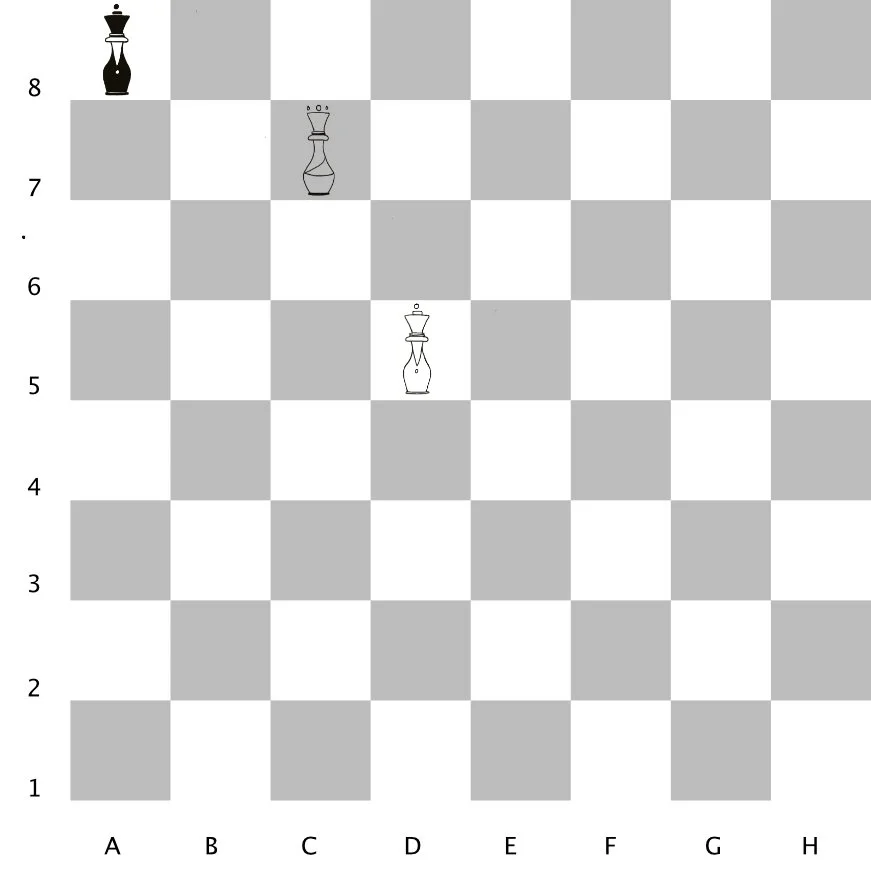
Board 1: Let’s So, as we learned, Stalemate is when the King is not in check, but has no legal (safe) moves. Versus Checkmate, when the Kings is in danger and has no legal (safe) moves.
On this board, is the King in check? It’s his team’s turn to move, can the King or another piece make a move?
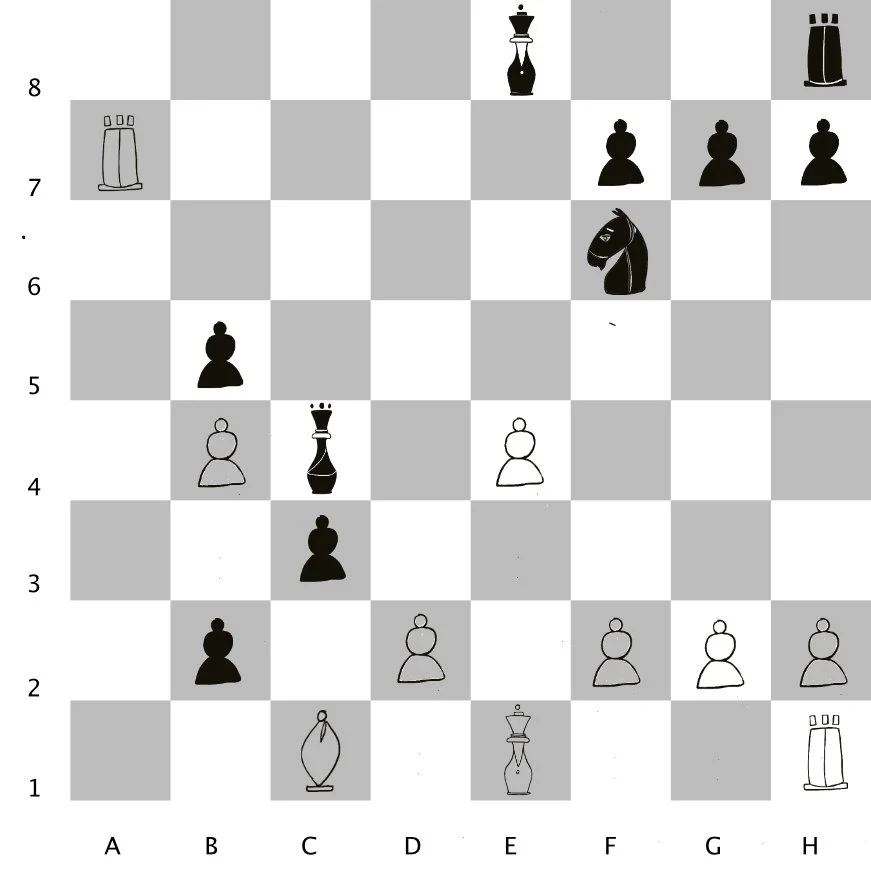
Board 2: Is this checkmate or stalemate? Why?
It’s neither. Both Kings are being threatened with an attack, but aren’t in immediate danger (check). Also, were the Black King put in check, he should be able escape or ask one of his teammate to either block the check, or capture the checker.
The White King looks to be in more danger with the Queen controlling the diagonal in front of him. But were she to attack, what could the White King do?